

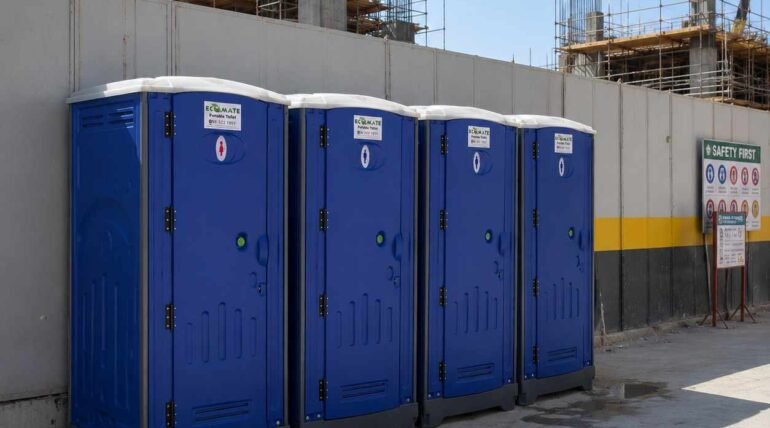
Construction and industrial projects across the GCC have never moved faster — or faced higher expectations. From large-scale infrastructure in Dubai and Abu Dhabi to remote oilfield operations deep in Saudi Arabia and Oman, the pressure on project managers to maintain welfare standards while keeping sites operationally efficient has grown considerably.
Sanitation, often an afterthought in legacy project planning, has become a genuine operational priority. And within that shift, HDPE portable toilets have quietly become the go-to choice for contractors who’ve learned the hard way that cheaper alternatives rarely hold up.
What Makes HDPE Different
HDPE, or High-Density Polyethene, has long been used in industrial and outdoor applications because of its strength and durability. It’s dense, chemically resistant, and structurally reliable under stress. In portable sanitation, these properties translate directly into units that handle rough site conditions without the cracking, fading, or warping that tends to plague older fibreglass or thin-plastic alternatives.
The seamless moulding process used in HDPE manufacturing also matters more than people initially realise. No joints means fewer points of failure. Fewer points of failure means less maintenance, and less maintenance means the sanitation infrastructure on site stays functional rather than becoming a recurring problem.
Built for What GCC Sites Actually Throw at Them
Anyone who has spent time on a GCC construction site between May and September understands what equipment has to endure. Surface temperatures regularly exceed what thermometers are designed to measure comfortably. UV exposure is relentless. Dust storms arrive without warning. Coastal projects add salt air into the equation.
Fibreglass units were never really designed with these conditions in mind. They manage — for a while. But prolonged UV exposure degrades the surface, heat cycles cause expansion and contraction that eventually crack structural points, and salinity accelerates corrosion in hardware components.
HDPE handles all of this considerably better. UV-stabilised formulations maintain structural integrity and surface appearance even after years of outdoor exposure. The material also resists moisture absorption, making it well-suited for humid coastal regions such as parts of the UAE and Qatar. For contractors running multi-year projects, that durability isn’t a luxury — it’s a direct cost consideration.
Site Handling and Portability in Practice
Construction sites are not static environments. Facilities that work well in one project phase often need to be relocated entirely as work progresses to new zones. This happens more frequently than most project timelines account for.
HDPE units are substantially lighter than comparable alternatives, which makes a real practical difference during relocation. Most quality units are also built with forklift pockets, lifting hooks, and skid-mounted bases precisely because the manufacturers understand how sites actually operate. Stackable designs reduce transport costs when moving multiple units between project zones or to a new site entirely.
For contractors managing large infrastructure projects across multiple phases, this kind of logistical flexibility adds up to meaningful time and cost savings.
Hygiene Standards Are No Longer Optional
HSE requirements across the GCC have tightened, and the practical enforcement of those requirements on construction sites has followed. Clients, consultants, and audit teams are looking more carefully at welfare facilities than they were even five years ago.
HDPE’s non-porous surface is a genuine hygiene advantage here. Unlike materials that develop microscopic cracks or absorb moisture over time, HDPE stays smooth. High-pressure washing cleans it effectively, industrial disinfectants don’t degrade it, and bacterial buildup is far less likely to become entrenched.
On large sites with hundreds or thousands of workers, maintaining consistent sanitation standards across all facilities is genuinely difficult. Units that are easier to clean and better at maintaining hygiene help simplify sanitation management compared to lower-quality alternatives.
The Cost Argument Over Time
The upfront price of quality HDPE units is higher than budget alternatives. That comparison tends to look different, though, once maintenance costs, replacement frequency, and downtime are factored in.
Units that crack, warp, or develop hygiene problems don’t just cost money to fix or replace — they create compliance exposure and affect workforce welfare at a time when both are scrutinised closely. Contractors who’ve moved to HDPE across their project portfolios generally report that the reduced operational friction justifies the investment within the first replacement cycle.
Regulatory and Worker Welfare Context
Worker welfare has moved from a background consideration to an active compliance requirement across GCC construction markets. UAE municipalities, Saudi labour regulations, and project-level HSE frameworks all place specific expectations on the quality and maintenance of sanitation facilities for site workers.
Clean, functional, and regularly maintained portable toilets are part of how companies demonstrate compliance during audits, maintain workforce morale on long-duration projects, and protect themselves from regulatory exposure. HDPE units, with their durability and easier maintenance profile, support that compliance more reliably than alternatives that require more frequent servicing and repair.
Sustainability Considerations
HDPE is recyclable. More relevantly for project operations, the durability of HDPE units means fewer units end up as waste over the lifecycle of a project or fleet. Their lighter weight also reduces fuel costs during transport — a factor that becomes more significant at scale across large or geographically dispersed project portfolios.
For developers and contractors working toward ESG targets or green building certifications, these are real contributions, even if they don’t represent the largest lever in overall sustainability planning.
What to Look for When Specifying Units
Not all HDPE portable toilets perform equally. Units built specifically for GCC conditions should include UV-stabilised construction, proper ventilation systems suited to high ambient temperatures, heavy-duty locking hardware, anti-slip flooring, and accessible waste tank servicing points.
Hand-wash station compatibility is increasingly expected on welfare-compliant sites. Transport and lifting features — pockets, hooks, skid bases — should be standard rather than optional. Specifying these requirements upfront avoids the situation where units that looked adequate on paper underperform in actual site conditions.
Final Thoughts
The shift toward HDPE portable toilets across GCC worksites reflects something broader happening in the industry: temporary infrastructure is no longer treated as temporary in terms of the standards it needs to meet.
Project owners, HSE teams, and labour welfare requirements have collectively raised the bar. HDPE portable sanitation units — durable, hygienic, practical in extreme conditions, and increasingly aligned with sustainability considerations — have risen to meet that bar in a way that older solutions haven’t kept pace with.
For contractors looking to reduce long-term operational friction while maintaining compliance across complex, demanding projects, the case for HDPE is straightforward.
