
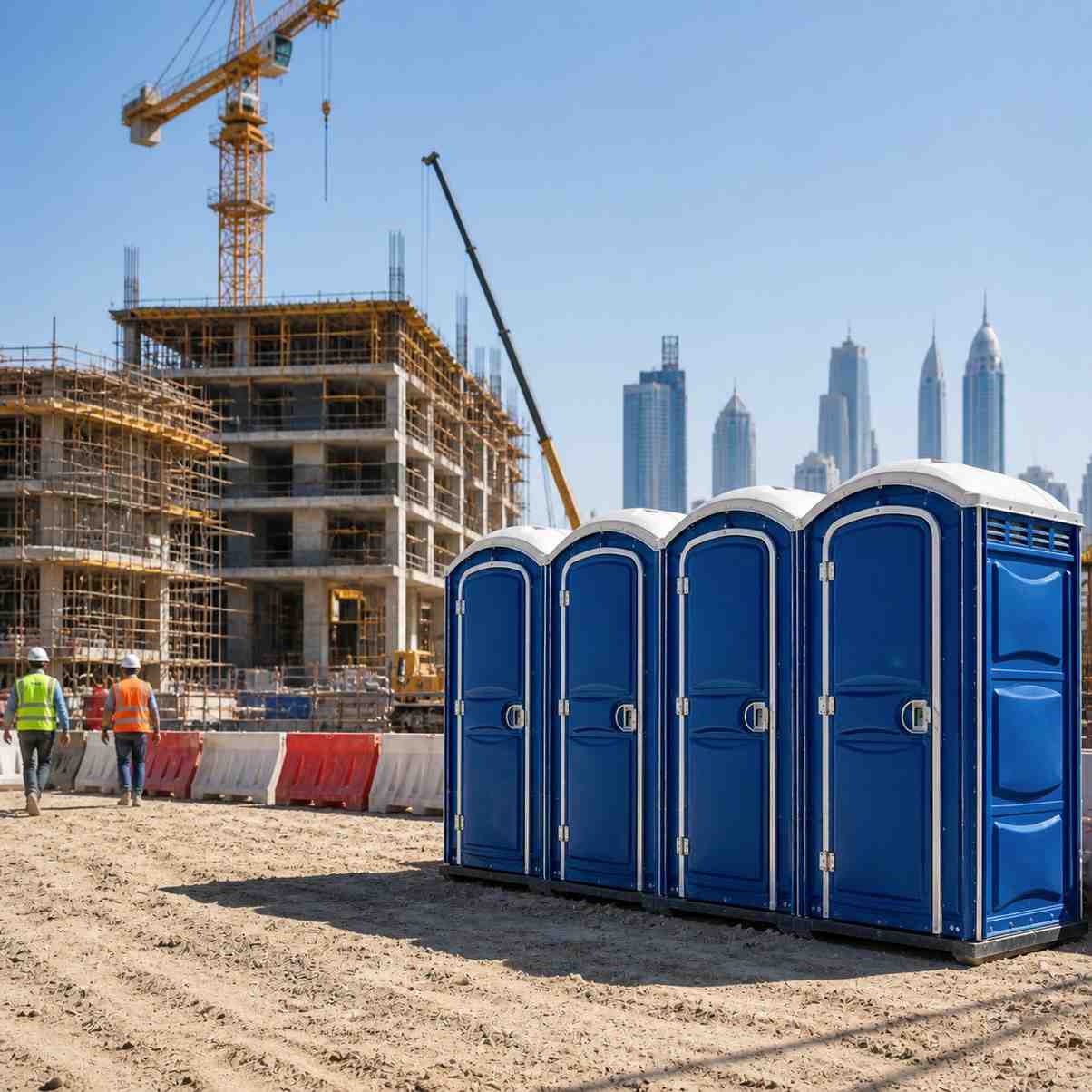
On construction sites across the UAE, sanitation is not something that can be delayed or treated as a secondary task. From the moment a site becomes operational, proper facilities are expected—not only to support daily work but also to meet regulatory standards and maintain overall site efficiency.
One of the common decisions faced during planning is whether to rent or buy portable toilets. While buying may appear to offer long-term value, the practical realities of construction projects often tell a different story.
Understanding the Real Difference Between Renting and Buying
The decision goes beyond a simple cost comparison. It affects how sanitation is managed throughout the entire project lifecycle.
With portable toilet rental, most operational responsibilities are handled by the provider. This includes delivery, positioning, servicing, waste removal, and compliance support.
Buying, however, shifts all of these responsibilities to the construction company. From logistics to maintenance, everything needs to be managed internally or through additional service contracts.
Cost Is More Than the Purchase Price
At first glance, purchasing a unit may seem cost-effective. However, the initial price does not reflect the full cost of ownership.
Over time, additional requirements begin to surface:
- Transportation between sites requires equipment and coordination
- Regular servicing involves cleaning, chemical refilling, and waste handling
- Waste disposal must follow approved municipal processes
- Storage space is needed when units are not in use
When these factors are considered together, portable toilet rental often proves to be more cost-efficient, particularly for projects that are temporary or constantly evolving.
Maintenance and Servicing in UAE Conditions
In a region where temperatures can exceed 45°C, sanitation maintenance becomes more demanding. Units require frequent servicing to maintain hygiene and usability.
With portable toilet rental:
- Servicing schedules are handled by the provider
- Waste is collected and disposed of through approved systems
- Units remain clean and operational without additional oversight
With owned units:
- Maintenance must be managed internally
- Delays or inconsistencies can lead to hygiene issues
- Additional manpower or contracts become necessary
This ongoing responsibility is often underestimated at the planning stage.
Compliance and Regulatory Requirements
Sanitation on construction sites in the UAE is closely regulated. Authorities require:
- An adequate number of units based on workforce size
- Regular cleaning and servicing
- Proper waste disposal through licensed facilities
Non-compliance can result in fines or operational delays.
Rental providers typically include these compliance requirements within their service scope. This reduces risk and ensures that sanitation standards are consistently maintained.
Flexibility as Projects Evolve
Construction sites rarely remain static. Workforce size, layout, and project phases change over time.
This is where portable toilet rental offers a clear advantage:
- Units can be added as the workforce increases
- Excess units can be removed when no longer required
- Adjustments can be made without long-term commitments
Owned units, on the other hand, remain fixed assets regardless of changing needs.
Storage and Asset Management
Ownership introduces another practical concern—storage.
Between projects, portable toilets need to be stored and maintained. In many cases, this leads to:
- Occupied yard space that could be used for equipment or materials
- Ongoing maintenance even when units are not in use
- Gradual wear and tear due to environmental exposure
Rental removes this burden entirely, as units are returned once the project is completed.
When Buying May Be Considered
Although portable toilet rental is more common, buying may still be considered in specific situations.
Ownership can make sense when:
- Projects are long-term and based in a fixed location
- Units are used continuously without relocation
- Internal systems are in place for maintenance and compliance
Even in these cases, the operational effort required remains significant.
Market Trends and Evolving Expectations
The portable sanitation sector in the UAE continues to evolve, influenced by higher standards and changing project requirements.
Current trends include:
- Increased demand for durable materials such as HDPE
- Better hygiene features, including handwash systems
- More frequent servicing in high-temperature conditions
- Growing focus on sustainability and efficiency
In many cases, rental providers adapt to these changes more quickly than owned infrastructure.
A Practical Perspective for Construction Companies
When all factors are considered—cost, maintenance, compliance, and flexibility—portable toilet rental tends to be the more practical choice for most construction projects in the UAE.
It reduces operational complexity while ensuring that sanitation standards are maintained consistently. For project teams managing multiple priorities, this can make a noticeable difference in daily efficiency.
Reliable portable toilet rental solutions, when managed by experienced providers, help maintain hygiene standards while reducing the operational burden on construction teams.
Conclusion
The decision between renting and buying portable toilets is not simply about ownership—it is about how effectively sanitation can be managed throughout a project.
In the UAE’s construction environment, where conditions are demanding and regulations are strict, flexibility and reliability often take priority over long-term ownership.
For most construction companies, portable toilet rental offers a balanced solution—combining cost control, compliance, and operational ease in a way that aligns with real project conditions.
Choosing the right approach is not just a financial decision; it directly influences efficiency, workforce welfare, and overall site performance.
