

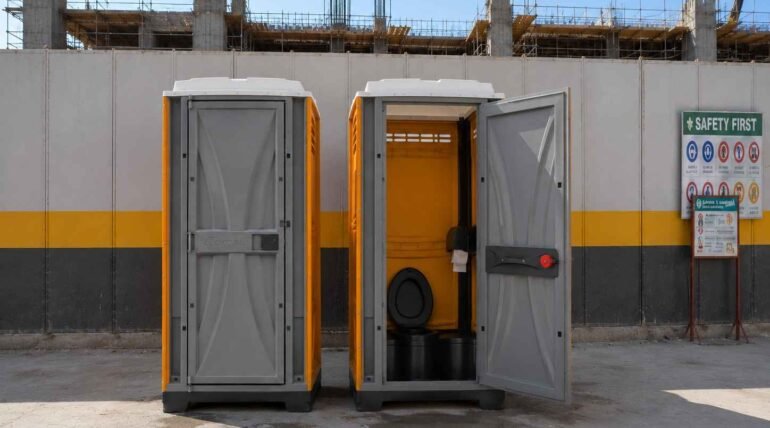
Sanitation rarely makes the agenda until something goes wrong. On a busy construction site, at a large outdoor festival, or across a remote infrastructure project, the absence of proper restroom facilities becomes impossible to ignore — and the consequences extend well beyond discomfort.
Portable chemical toilets have become a practical answer to this challenge. Across the UAE and the wider GCC, they are a standard fixture on well-managed sites and events, playing a genuine role in protecting public health, meeting welfare obligations, and maintaining hygiene where permanent infrastructure simply does not exist.
Why Hygiene Becomes Complicated in Temporary Settings
Permanent facilities draw on established sewage infrastructure. Temporary environments have none of that. Construction sites, labour accommodations, outdoor events, and remote project locations bring together large numbers of people — sometimes for months — without access to conventional plumbing.
Poor waste management in these settings does not stay contained. It affects soil, nearby water sources, and the people working or gathering in the area. Health risks build quietly, and by the time problems become visible, the damage is already done. This is what makes reliable sanitation planning essential from day one, and why experienced portable toilet suppliers have become valued partners across industries throughout the UAE and GCC.
How Portable Chemical Toilets Actually Work
The design is straightforward but effective. Portable chemical toilets operate entirely independently — no water supply connection, no sewage link required. Waste collects in a sealed holding tank where specially formulated chemical solutions break down waste material, actively suppress bacterial growth, and control odour. Ventilation systems, secure containment fittings, and user-facing hygiene features complete the system.
The result is a self-contained unit that can be deployed almost anywhere, serviced on a schedule, and removed cleanly without leaving environmental traces behind.
Disease Prevention: The Public Health Case
This is the dimension of portable sanitation that rarely gets the attention it deserves. The conversation tends to focus on odour and convenience, but the more serious concern is pathogen transmission.
Human waste left uncontained becomes a vector for disease. Bacteria such as E. coli and pathogens linked to hepatitis A, typhoid, and dysentery spread through contaminated surfaces, water, and soil contact. On a construction site accommodating hundreds of workers, or at a public event drawing thousands of visitors, that risk multiplies fast.
The chemical solutions inside portable toilets actively suppress bacterial growth within the holding tank, reducing harmful microorganism concentrations before waste reaches a disposal facility. This breaks the chain of transmission that allows disease to move through shared sanitation environments. Hand hygiene provision at the point of use — whether through hand wash stations or sanitiser dispensers — adds a critical second layer of protection.
In the UAE, where labour welfare standards face increasing regulatory scrutiny, disease prevention through properly maintained portable sanitation has moved from a background consideration to an active compliance requirement.
The UAE and GCC Climate: A More Demanding Environment
Portable sanitation in the Gulf operates under conditions that push standard equipment hard. Summer temperatures across the UAE regularly exceed 45°C, and enclosed units on exposed sites can climb considerably higher. That heat does not just make conditions unpleasant — it accelerates the biological processes that make poor sanitation dangerous.
Bacterial growth rates increase sharply with temperature. Waste that remains relatively stable in temperate climates breaks down far faster under Gulf summer conditions, producing odour compounds more quickly and raising pathogen concentrations. Standard chemical formulations developed for European or North American conditions are not built for this — they are frequently outperformed by the climate before a servicing cycle is complete.
Reputable portable toilet suppliers operating in the GCC use chemical treatments specifically calibrated for high-temperature environments, maintaining their suppressive effect through a long working day and extending the viable window between service visits. For any site or event manager in the region, climate-appropriate chemical treatment should be a specific point in every supplier conversation.
Environmental Protection: Keeping Waste Where It Belongs
Improperly managed human waste does not disappear — it moves into the surrounding environment. On temporary sites where drainage is absent and ground surfaces are disturbed, that movement happens faster than expected.
Portable chemical toilets contain waste within a sealed system from deposit through to professional collection and treatment at approved disposal facilities. This protects surrounding soil, prevents leachate from reaching groundwater, and eliminates the risk of surface runoff contaminating drainage channels or natural water sources.
In the UAE and GCC, where water scarcity makes groundwater protection a serious environmental concern and waste disposal regulations continue to strengthen, responsible waste containment carries both regulatory and ethical weight. A well-managed portable sanitation setup, supported by a supplier with compliant disposal procedures, is how that obligation gets met in practice.
Modern Units: Built for Genuine Hygiene
The portable toilet of twenty years ago bears little resemblance to current units. Modern designs reflect a far clearer understanding of what makes a temporary facility actually usable and maintainable in demanding conditions.
Current units include integrated hand wash stations with fresh water supply, hand sanitiser dispensers positioned at the exit point, mechanical ventilation systems that reduce interior temperature and odour buildup, non-slip flooring for safe use when footwear is wet or muddy, easy-clean interior surfaces for thorough disinfection during servicing, and improved sealed tank designs that handle higher waste volumes without overflow risk.
Each feature serves a purpose. A facility without hand hygiene provision at the point of exit is a contamination risk regardless of interior cleanliness. Ventilation matters more in Gulf conditions than in cooler climates — heat inside an unventilated unit compounds odour and discourages use. Non-slip flooring on an active construction site is a safety requirement, not a comfort upgrade. The full feature set, not just the basic enclosure, determines whether a unit actually does its job.
Construction Sites, Events, and Remote Locations
On construction projects, permanent welfare facilities are typically among the last things completed. The interim period — which can stretch across months or years — leaves the workforce dependent on temporary provision. Worker welfare directly affects productivity, site morale, and health and safety compliance. Portable chemical toilets can be installed at project start, repositioned as work progresses, and scaled to match workforce size throughout — making them the practical standard across UAE and GCC construction.
At outdoor events, the pressure is different but equally real. High visitor numbers, limited infrastructure, and full-day operating hours create conditions where poor sanitation becomes immediately visible. Queues, hygiene failures, and complaints quickly land in public view. For festivals, sporting events, exhibitions, and community gatherings throughout the UAE, portable sanitation is now considered essential event infrastructure.
For oil and gas operations, infrastructure projects, mining activities, and utility maintenance in remote locations, the self-contained design of portable chemical toilets removes the need for site plumbing preparation entirely. Units arrive, get positioned, and are maintained on schedule — making them the dependable choice wherever permanent services cannot reach.
Servicing: Where Provision Becomes Performance
A portable toilet that is not properly maintained stops being a sanitation solution and becomes a hygiene liability. Routine servicing covers waste removal and transport to approved disposal facilities, full interior cleaning and disinfection of all contact surfaces, chemical replenishment to restore holding tank treatment to effective concentration, restocking of soap, sanitiser, and paper supplies, and physical inspection for damage or seal failures.
Each step matters independently. Skipping chemical replenishment dilutes the treatment and reduces bacterial suppression. Inadequate surface disinfection leaves pathogens present regardless of chemical freshness. Depleted hygiene supplies remove protection at the point of use — exactly where it counts most.
Service frequency must reflect actual usage. A unit serving a large workforce needs more frequent attention than one covering a small team. Reputable portable toilet suppliers build schedules around real demand rather than default intervals, and maintain the capacity to respond between scheduled visits when something needs attention.
Choosing the Right Supplier
Product quality, durability under GCC conditions, regulatory compliance, welfare solutions including hand wash stations, and experience across different project scales are all worth assessing carefully. The conversation should extend beyond unit specifications to cover chemical treatment approach, servicing methodology, waste disposal compliance, and response capability.
A supplier with a track record across both small events and long-running infrastructure programmes brings practical knowledge that directly shapes outcomes on site.
In Summary
Clean, reliable sanitation in temporary environments requires the right equipment, chemical treatments calibrated for local climate conditions, responsible environmental waste management, and a servicing structure that keeps facilities genuinely functional throughout a project or event’s lifespan.
Portable chemical toilets remain one of the most effective tools available for meeting that requirement — protecting public health, preventing disease transmission, safeguarding soil and groundwater, supporting worker welfare, and keeping temporary environments clean and compliant. As hygiene, welfare, and environmental standards continue to develop across the UAE and GCC, experienced portable toilet suppliers will remain essential partners in delivering dependable sanitation wherever permanent infrastructure cannot.
