

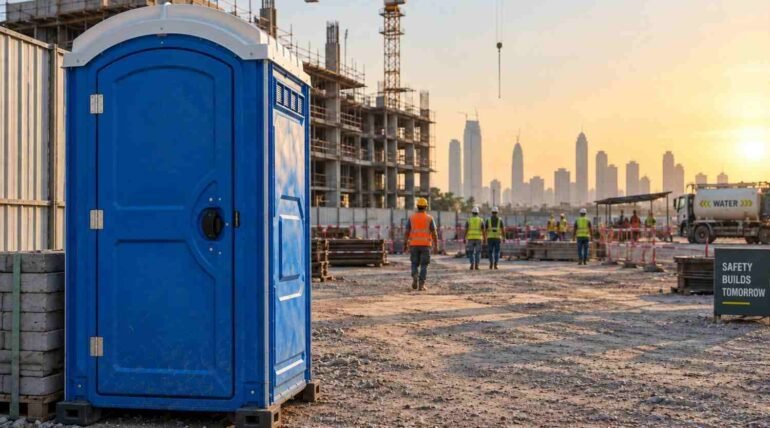
Construction sites rarely offer ideal conditions. Projects can operate in remote areas, exposed locations, temporary compounds and rapidly changing work zones where permanent restroom infrastructure is not yet available. In these environments, sanitation is not simply a convenience—it is an essential part of worker welfare, site hygiene and daily operations.
For contractors and project managers searching for portable toilets in UAE, the right solution needs to handle more than basic sanitation. It should be durable, hygienic, easy to service, suitable for the UAE climate and practical to relocate as the project develops.
Why Portable Sanitation Matters on Modern Worksites
A construction workforce may spend long hours away from permanent buildings and municipal facilities. Without conveniently located sanitation, workers may have to travel considerable distances from active work areas, affecting productivity and creating unnecessary welfare concerns.
Portable toilets provide a flexible alternative that can be installed where permanent plumbing or sewer connections are unavailable. They are particularly useful during early construction phases, infrastructure projects, remote developments, temporary compounds and sites where workforce numbers change throughout the project.
More importantly, sanitation should be considered part of the overall site welfare strategy alongside drinking water, shaded rest areas, handwashing facilities and first-aid provisions.
Built for Demanding Construction Environments
Construction sites expose equipment to dust, heat, frequent movement, heavy usage and rough operating conditions. A standard lightweight unit may not always be appropriate for these environments.
Modern construction-grade portable toilets can incorporate durable materials such as UV-treated HDPE, reinforced structures, ventilation systems and smooth surfaces designed for efficient cleaning. These features help the units withstand regular use while supporting easier hygiene management.
For projects requiring enhanced comfort, prefabricated sanitation units can also provide greater insulation and weather protection. Material selection therefore becomes an important consideration when choosing portable toilets in UAE, particularly for long-duration or high-traffic worksites.
UAE Heat Makes Climate-Ready Sanitation Essential
The UAE presents a particular challenge for temporary sanitation infrastructure. During summer, direct solar exposure can dramatically increase temperatures inside enclosed spaces.
Poor ventilation can contribute to uncomfortable conditions, faster odour buildup and reduced user acceptance. For this reason, project teams should consider units with effective ventilation, UV-resistant materials, reflective finishes, shading or climate-control options where appropriate.
For larger or premium worksite facilities, air-conditioned or forced-air configurations can provide a more comfortable environment. The objective is not simply to place a toilet on-site, but to provide sanitation that remains practical throughout changing weather and operating conditions.
Choosing the Right Unit for Workforce Requirements
Not every project requires the same sanitation setup. The number of workers, project duration, site layout, workforce demographics and operating conditions should all influence the selection.
Common options include:
- Standard portable toilets for general workforce use and high-traffic construction areas.
- Flushable or deluxe units where enhanced comfort and hygiene are required.
- Accessible units with wider entrances, easier access, and appropriate internal features.
- Specialised units for demanding construction environments or projects requiring specific handling and relocation arrangements.
A well-planned setup may also combine toilets with separate handwashing stations so workers have convenient access to soap, water and hygiene facilities.
Compliance Is Part of the Sanitation Strategy
For UAE construction projects, sanitation planning should not be separated from health, safety and welfare responsibilities. Requirements can vary by emirate, project type, workforce size and authority, so contractors should verify the applicable regulations before deployment.
Research provided for this topic identifies Dubai Municipality construction-site requirements that include minimum sanitation provisions based on workforce size, along with requirements relating to weather protection, lockable facilities, accessibility, cleansing agents, lighting, ventilation and cleaning schedules.
This highlights an important point: compliance is not achieved simply by having a toilet on-site. Units need to be correctly selected, positioned, maintained and serviced.
Proper Placement Improves Hygiene and Productivity
Even a high-quality portable toilet can become ineffective if it is poorly positioned.
Units should be located close enough to work areas for convenient access while remaining away from hazardous operations, falling-object zones, material storage and vehicle routes. Shaded and protected locations can also improve comfort during hot weather.
Service vehicles should have clear access to the units, while the overall layout should prevent unnecessary congestion around worker welfare areas.
For remote and large-scale developments, this becomes even more important because moving service equipment across long distances can increase operational costs and complicate maintenance schedules.
Cleaning and Servicing Are Critical
The quality of a portable sanitation solution depends heavily on its servicing programme. High workforce numbers and intensive usage can quickly increase the need for cleaning, waste removal, replenishment, and inspection.
Professional sanitation planning should account for:
- Workforce size and shift patterns
- Expected daily usage
- Waste-tank capacity
- Cleaning and sterilisation requirements
- Water and consumable availability
- Site accessibility
- Seasonal temperature conditions
- Emergency servicing requirements
The supplied research highlights daily cleaning and at least twice-weekly sterilisation as important considerations under the cited Dubai Municipality guidance.
Keeping documented service records can also help project teams demonstrate that sanitation facilities are being properly maintained.
Smarter and More Sustainable Portable Sanitation
Portable sanitation is also becoming more technology-driven. Smart monitoring systems can use sensors to track tank fill levels, temperature, usage, or other operating conditions. This can allow service providers to move from fixed schedules toward condition-based servicing, potentially reducing unnecessary visits while helping prevent overflow situations.
Sustainability is another growing consideration. Waterless systems, ultra-low-flush technologies, biological treatment solutions, and solar-powered mobile facilities can be particularly valuable where water availability, energy consumption, or sewer connectivity is a challenge.
For remote UAE projects, these options can provide practical advantages while supporting broader environmental objectives.
A Practical Approach to Selecting Portable Toilets
Before ordering sanitation facilities, project teams should evaluate the complete operating environment rather than focusing only on the unit price.
Consider:
- How many workers will use the facilities?
- How long will the project operate?
- Where will the units be positioned?
- What are the summer heat and exposure conditions?
- How frequently will cleaning and servicing be required?
- Are accessible or gender-specific facilities needed?
- Are water-saving or waterless options appropriate?
- What local authority requirements apply to the project?
This approach helps contractors choose a sanitation system that is suitable for actual site conditions rather than simply selecting the cheapest available option.
Conclusion
Challenging worksite conditions demand practical sanitation solutions that can keep pace with the realities of construction. Portable toilets in UAE provide the flexibility to deliver essential facilities where permanent infrastructure is unavailable, while modern designs offer improvements in durability, ventilation, hygiene, accessibility, and operational efficiency.
For UAE contractors, the best solution is one that considers climate, workforce size, site conditions, servicing, compliance, mobility, and long-term project requirements together. When sanitation is planned as an integral part of site welfare—not an afterthought—it contributes to a cleaner, safer, and more efficiently managed working environment.
