

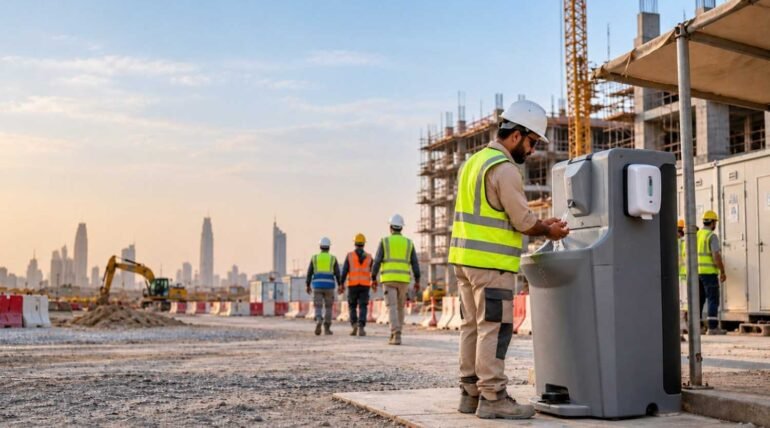
Large construction projects involve hundreds or even thousands of workers moving between work zones, equipment areas, welfare facilities and break areas throughout the day. With so many people sharing the same environment, access to proper handwashing facilities is essential for maintaining hygiene, supporting worker welfare and reducing the spread of germs.
Planning an effective Hand Wash Station setup requires more than installing a few basins around the site. Contractors must consider workforce size, station placement, water availability, drainage, cleaning schedules and changing site requirements. In the UAE, these decisions also need to account for high temperatures, dust and the operational demands of large construction projects.
A well-planned handwashing system helps workers maintain good hygiene while supporting smoother day-to-day site operations.
Assess the Workforce and Daily Hygiene Requirements
The first step is to understand how many people will use the facilities. A construction site may accommodate main contractors, subcontractors, engineers, delivery personnel, security staff and visitors. The number of workers can also change as the project moves through different phases.
Plan facilities around the peak number of people working on-site at the same time, rather than relying only on average daily attendance. Consider shift changes, meal breaks, concrete pours and other activities that may create sudden increases in demand.
Also assess the type of work being performed. Workers handling cement, dust, paints, oils, adhesives or other substances may require more convenient access to suitable washing facilities.
A workforce assessment helps determine the number of stations needed, the appropriate capacity for each unit and the frequency of cleaning and replenishment.
Choose Suitable Locations for Hand Wash Stations
Even a well-equipped station may be underused if workers must walk too far to reach it. Convenient placement is therefore one of the most important parts of construction site hygiene planning.
Consider installing a Hand Wash Station near:
- Construction site toilets and changing areas
- Site entrances and exits
- Canteens, dining areas and rest facilities
- Worker accommodation and welfare areas
- Workshops and designated high-contamination work zones
- Remote work fronts where access to existing facilities is limited
Handwashing facilities should be available close to toilet facilities, with additional stations positioned where workers need to clean their hands before eating or returning to other activities. Applicable local regulations, client requirements, and project health and safety standards should guide the final layout. Refer to the UAE workplace health and safety requirements for additional context.
Review the site plan regularly as access routes, work areas and workforce distribution change. Relocating or adding stations when necessary can help prevent queues and make hygiene practices easier to follow.
Select the Right Type of Handwashing Facility
Not every construction project has the same infrastructure or operational requirements. A site with permanent plumbing may use fixed washbasins, while a project with changing work zones may benefit from portable or self-contained handwashing units.
When choosing a portable hand wash station, assess the following factors:
- Capacity: Can the unit accommodate expected usage during busy periods?
- Water supply: Does it connect to a reliable supply or use a refillable water tank?
- Drainage: Is wastewater collected or discharged through an approved system?
- Ease of cleaning: Can the basin, taps and surrounding surfaces be cleaned efficiently?
- Durability: Are the materials and fittings suitable for frequent use and outdoor exposure?
- Mobility: Can the unit be repositioned as the project progresses?
For temporary construction facilities, portable handwashing stations can offer flexibility where permanent plumbing is unavailable or impractical. The most suitable option depends on the site layout, expected usage, servicing arrangements and available utilities.
Plan Water Supply, Soap and Wastewater Management
A handwashing facility is only useful when it has the supplies and infrastructure needed for regular operation. Water availability, soap replenishment, hand-drying provisions and wastewater management should all be addressed during the planning stage.
For sites using self-contained units, calculate water demand based on expected usage and establish a dependable refill schedule. Tank capacity should allow for busy periods without frequent interruptions.
Each station should have suitable handwashing supplies, including soap and an appropriate drying method. Dispensers should be protected from dust and environmental exposure, particularly at outdoor sites.
Wastewater management also requires attention. Collection tanks must have adequate capacity and servicing or disposal should follow applicable local requirements. Uncontrolled discharge can create hygiene problems, slippery surfaces and environmental concerns.
Water-efficient taps, controlled-flow fittings and prompt leak repairs can help reduce unnecessary consumption without making handwashing inconvenient.
Account for UAE Heat, Dust and Outdoor Conditions
Construction sites in the UAE face environmental conditions that can affect the performance and usability of sanitation equipment. High temperatures, intense sunlight, airborne dust and humidity can place additional demands on materials, fittings and water storage.
When selecting outdoor handwashing facilities, consider weather-resistant construction, corrosion-resistant fittings, stable installation and protected soap dispensers. Shaded placement can improve user comfort and help protect equipment from direct sunlight.
Water tanks and supply arrangements should be suitable for the expected operating conditions. Regular inspections are also important because leaks, blocked drainage, damaged fittings or empty tanks can quickly disrupt facility use.
For projects in particularly demanding environments, discuss site conditions and servicing requirements with the supplier before choosing the equipment. Selecting a suitable unit from the beginning can help reduce avoidable maintenance issues.
Establish a Reliable Cleaning and Maintenance Schedule
Installing handwashing facilities is only the beginning. Without regular servicing, stations can run out of water or soap, develop drainage problems or become unsuitable for everyday use.
A practical maintenance plan should include:
- Before each shift: Check water supply, soap, drying materials and general cleanliness.
- During the day: Replenish supplies and inspect heavily used stations.
- After shifts: Clean basins, sanitise appropriate contact surfaces and remove waste.
- At regular intervals: Inspect taps, plumbing, drainage, tanks and structural components.
- During site changes: Review station locations and capacity as workforce requirements evolve.
Assign clear responsibility to a site supervisor, welfare coordinator or designated facilities team. Maintain inspection and cleaning records to support internal checks and demonstrate that the facilities are being managed consistently.
The servicing schedule should reflect actual usage, environmental conditions and project requirements rather than following the same routine for every station.
Make Hand Hygiene Easy for Every Worker
Good hygiene practices are more likely to become part of everyday routines when facilities are convenient, accessible and properly maintained.
Use clear signage to encourage workers to wash their hands after using the toilet, before eating and after handling potentially contaminating materials. Where the workforce includes people who speak different languages, simple visuals and multilingual instructions can improve understanding.
Ensure that stations are accessible to the people expected to use them, including workers with mobility needs. Provide suitable facilities for all workforce groups in line with applicable requirements.
Site inductions and toolbox talks can reinforce these practices, but training works best when workers have reliable access to the equipment and supplies they need.
Create a Handwashing Plan That Can Adapt
Construction projects rarely remain static. Workforce numbers increase, work zones move and new subcontractors join as different stages begin. A handwashing plan should be reviewed alongside the construction programme rather than treated as a one-time installation decision.
Before mobilisation, assess the workforce, identify hygiene risk areas, select suitable equipment and establish water and servicing arrangements. During the project, monitor usage, inspect facilities and add or reposition stations when demand changes.
For large UAE projects, coordination between the contractor, health and safety team, welfare personnel and sanitation supplier can help keep facilities aligned with operational needs.
Conclusion
Planning effective handwashing facilities is an important part of maintaining hygiene and worker welfare on large construction projects. The right approach combines workforce-based capacity planning, convenient placement, suitable equipment, reliable water supply, responsible wastewater management and consistent maintenance.
A properly selected Hand Wash Station can make everyday hygiene more accessible while helping contractors manage changing site conditions. By reviewing requirements throughout the project and prioritising reliable servicing, construction teams can create a cleaner, more practical working environment.
For projects that need flexible sanitation facilities, Ecomate offers portable sanitation solutions to support different site requirements. Choosing equipment that suits the workforce, available utilities and operating conditions helps make handwashing facilities a practical part of construction site planning.